Long before the world knew its name, Tuskegee was a small county seat in east-central Alabama. Its people built a school, staffed a hospital, trained pilots, took a gerrymander to the Supreme Court and won, and elected some of the South’s first Black officials after Reconstruction. Iota Omega Chapter was chartered here in 1923, and the story of this town is the story of the men who have worn the purple and gold in it.
The Founding Of Tuskegee
Tuskegee was founded and laid out in 1833 by Gen. Thomas Simpson Woodward, a veteran of the Creek War of 1813–14, one year after the Alabama legislature created Macon County. It was named the county seat, a role it holds to this day.
The land had long been home to the Muscogee (Creek) people. The town takes its name from the Creek town of Taskigi; some accounts trace it to Taskeke, a Muscogee word often translated as “warriors.” After the Creek were forcibly removed from Alabama in 1836, white settlers moved in, and Tuskegee grew as a cotton market town.
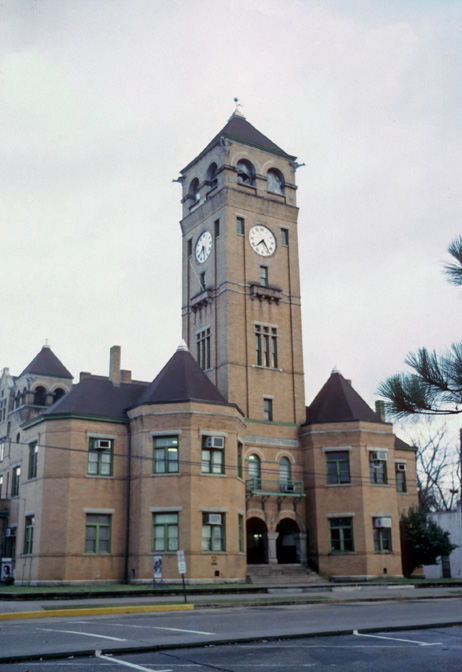
The city was formally incorporated on February 13, 1843. The present Macon County Courthouse, built in 1905, still anchors the square at the center of town.
A Town That Changed America
1843
Tuskegee Becomes a City
Ten years after its founding, Tuskegee was formally incorporated on February 13, 1843. The courthouse square at its center became the heart of Macon County life, and the streets laid out around it still form downtown today.
1880–1881
A Town Builds Its Own School
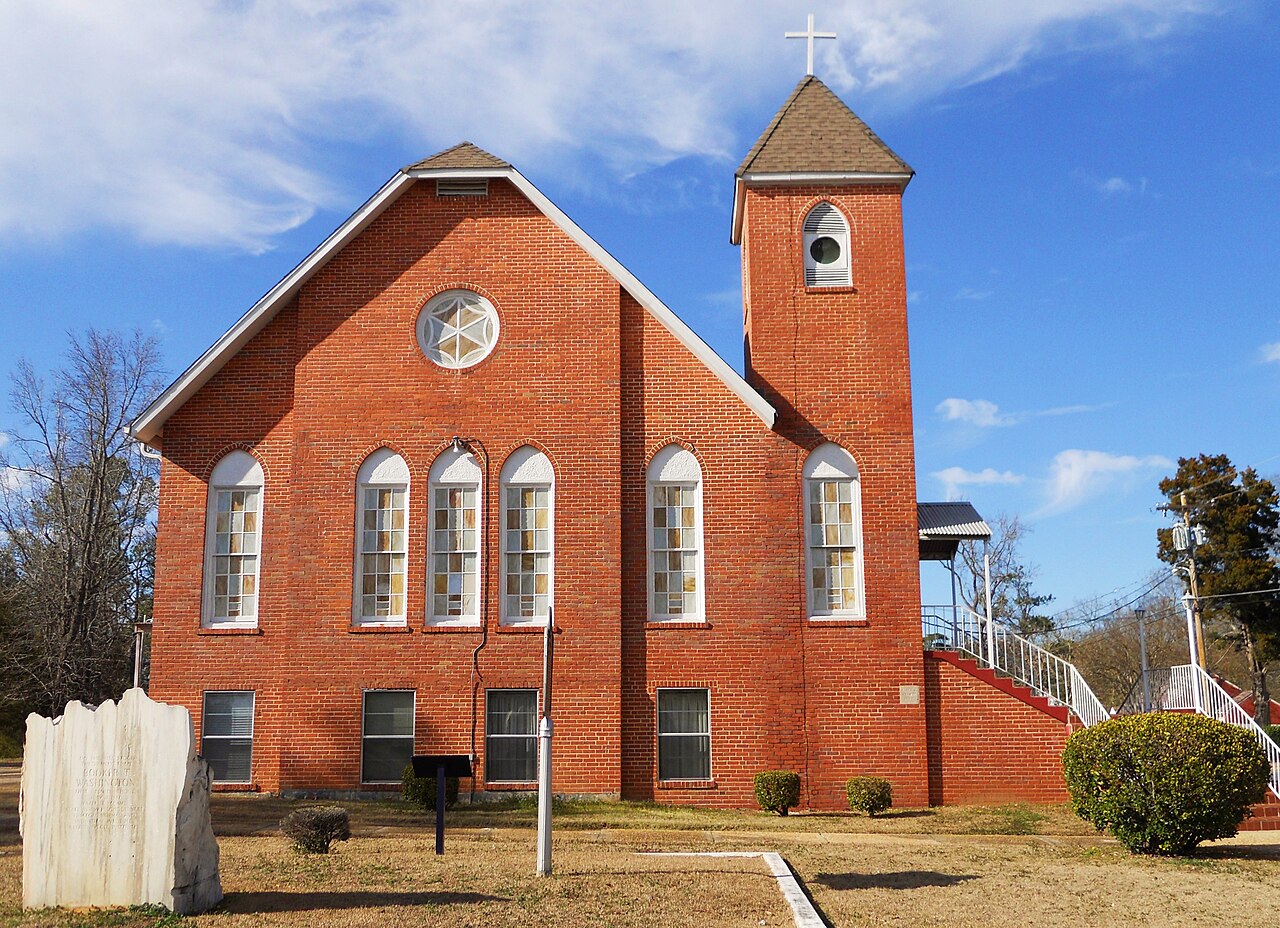
Lewis Adams, a formerly enslaved tinsmith and one of the most respected Black men in Tuskegee, struck an election-year agreement with local candidate Wilbur F. Foster: Black votes in exchange for a state-funded school. Adams and George W. Campbell secured $2,000 a year from the State of Alabama for teachers’ salaries, though nothing for land or buildings. On July 4, 1881, Booker T. Washington opened the Tuskegee Normal School for Colored Teachers on the grounds of Butler Chapel A.M.E. Zion Church. The school that would become Tuskegee University began as the town’s own idea.
1913
Birthplace of Rosa Parks
Rosa Louise McCauley, the future Rosa Parks, was born in Tuskegee on February 4, 1913. Forty-two years later her refusal to give up her seat in Montgomery launched the bus boycott that changed the nation.
1923
The Veterans Hospital, and Iota Omega
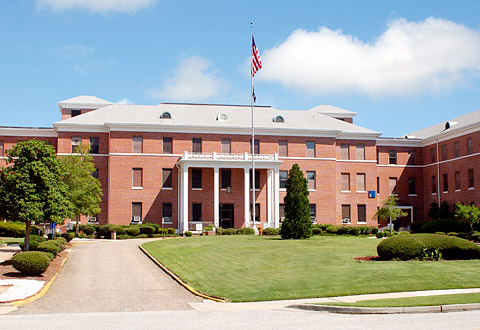
On January 21, 1923, the Iota Omega Chapter of Omega Psi Phi was chartered in Tuskegee. Weeks later, on February 12, the Veterans’ Hospital opened on 300 acres donated by Tuskegee Institute to care for Black veterans of World War I. The Veterans’ Bureau planned an all-white staff to appease the Klan; Institute president Robert R. Moton wrote President Harding and the town and the NAACP pushed back. Four Black physicians began work in November 1923, and by the end of 1924 Black physicians ran the hospital under Dr. Joseph H. Ward. Many of Iota Omega’s early brothers were its doctors and staff.
1932–1972
The Tuskegee Syphilis Study
For forty years the U.S. Public Health Service studied untreated syphilis in 399 Black men from Macon County, telling them they were being treated for “bad blood” while withholding care, even after penicillin became the standard cure in the 1940s. A whistleblower exposed the study in 1972, and Brother Fred D. Gray, Sr. filed a class action on behalf of the men that won a $10 million settlement for survivors and their families. President Clinton formally apologized in 1997, and the National Center for Bioethics in Research and Health Care was established at Tuskegee University in its wake.
1941
The Tuskegee Civic Association and Moton Field

In 1941 residents formed the Tuskegee Civic Association to register Black voters, led for decades by Iota Omega’s own Brother Dr. Charles G. Gomillion. The same year, training began at Moton Field for the nation’s first Black military pilots. More than 1,000 pilots trained at Moton Field and nearby Tuskegee Army Air Field, among them Iota Omega’s Brother George “Spanky” Roberts, who commanded the 99th Fighter Squadron. The Tuskegee Airmen’s record helped end segregation in the armed forces.
1957–1961
The Gerrymander, the Boycott, and the Supreme Court
On June 25, 1957, about 3,000 Black residents packed Butler Chapel to protest Local Law 140, which redrew the city limits from a square into a 28-sided figure that left nearly every Black voter outside the city. Led by Brother Gomillion, the town answered with a boycott of white-owned businesses that lasted about four years; 26 of those businesses closed. Brother Fred D. Gray, Sr. argued Gomillion v. Lightfoot before the U.S. Supreme Court, which struck the gerrymander down unanimously in 1960, and the original boundaries were restored in 1961. The case became a cornerstone of the voting rights law that followed, including the Voting Rights Act of 1965.
1963
Tuskegee High School Is Integrated
On September 3, 1963, state troopers blocked the doors of Tuskegee High School. After President Kennedy federalized the Alabama National Guard, the school opened on September 10 with thirteen Black students enrolled.
1966
A First for the South
Macon County voters elected Lucius Amerson sheriff, the first Black sheriff elected in Alabama, or anywhere in the South, since Reconstruction. He was sworn in in January 1967.
1972
Tuskegee’s First Black Mayor
Johnny Ford was elected the city’s first Black mayor and went on to serve six consecutive terms. In 2000, Lucenia Williams Dunn became Tuskegee’s first Black woman mayor.
1984–1985
Downtown on the National Register
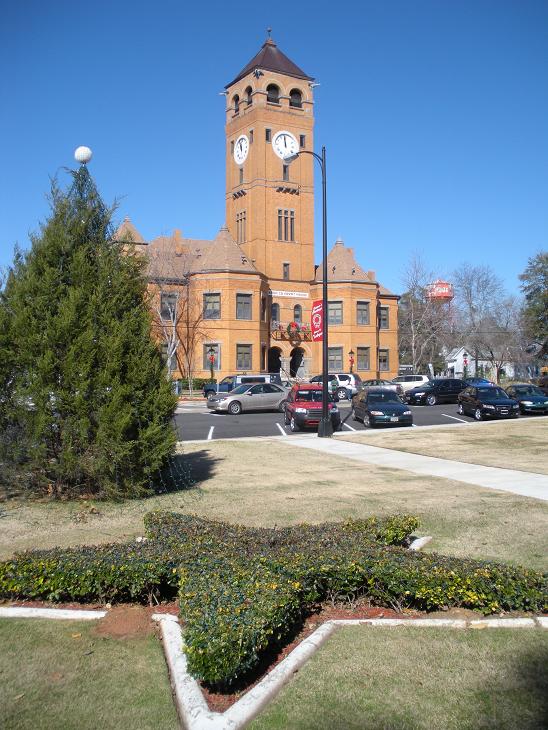
The Main Street Historic District (1984) and the North Main Street Historic District (1985) were added to the National Register of Historic Places, recognizing the downtown that grew up around the courthouse square. Butler Chapel followed in 1995.
Today
Tuskegee Now
Tuskegee remains the seat of Macon County, a city of about 8,400 people (2020 Census). Visitors come for the Tuskegee History Center’s exhibits on the town and on human rights, the Tuskegee Airmen National Historic Site at Moton Field, the Tuskegee Institute National Historic Site, and the 11,000-acre Tuskegee National Forest.
Iota Omega In Tuskegee
Iota Omega has been part of Tuskegee’s story for more than a century. Its brothers staffed the town’s hospitals, hosted the Fraternity’s national Conclave, led its fight for the vote, flew with its Airmen, and still serve in its government.
1923
Chartered by the Town’s Professionals
Iota Omega was chartered on January 21, 1923 by founding brothers John H. Brown, D.B. Fullwood, Richard H. Richardson, James E. Scott, and D.B. Taylor. In its infancy the chapter was made up of professors, doctors, businessmen, and employees of the U.S. Veterans’ Bureau Hospital.
The Veterans Hospital
Where the Early Chapter Worked
The hospital the town fought to staff with Black professionals became home to many of Iota Omega’s brothers. Brother John B. Barrett held charge of the hospital’s Clinical Laboratory for 16 years. Brother Dr. George C. Branche served 15 years on its neuropsychiatric staff, presenting his research to the American Psychiatric Association in 1934 and 1939. At the Institute’s John A. Andrew Memorial Hospital, Brother Dr. John W. Chenault directed orthopedic surgery.
1925
The Grand Conclave Comes to Tuskegee
Just two years after the charter, the Fraternity held its 14th Grand Conclave in Tuskegee, convening on December 27, 1925 in Dorothy Hall on the Institute campus. Brother Barrett served as Grand Marshal.
1939–1960
Brothers on the Front Line
Brother Dr. Charles G. Gomillion, initiated through Iota Omega in Spring 1938 and Basileus of the chapter in 1939, led the Tuskegee Civic Association and won Gomillion v. Lightfoot. Brother George “Spanky” Roberts commanded the 99th Fighter Squadron of the Tuskegee Airmen.
Today
Still Serving the Town
More than 340 men have been initiated through Iota Omega, and 500 more through Lambda Epsilon, the undergraduate chapter at Tuskegee University whose founding Iota Omega spearheaded in 1947. Among them is City Councilman James A.R. Arrington, who represents District 4 on the Tuskegee City Council and was initiated into Omega through Iota Omega Chapter in Spring 2009.
Made In Iota Omega
More than 340 men have crossed the burning sands through Iota Omega. These are a few of the initiates whose service left a mark on Tuskegee, Alabama, and the Fraternity.
Brother F.C. Alston
Initiated Spring 1923
A charter-line brother. Created the escutcheon design for the cover of the Oracle in 1923, setting the standard for the editions that followed.
Brother Dr. Charles G. Gomillion
Initiated Spring 1938
Basileus in 1939, longtime leader of the Tuskegee Civic Association, and the plaintiff whose Supreme Court victory restored the Black vote in Tuskegee.
Brother Dr. William O. Jones
Initiated Fall 1956
Professor of Veterinary Science at Tuskegee University and Most Worshipful Grand Master of the Prince Hall Grand Lodge of Alabama.
Brother Essex B. Lampkin
Initiated Spring 1971
Served the Fraternity as 7th District Keeper of Records and Seal.
Brother Aubrey O. Page
Initiated Fall 1979
Represented his community in the Alabama House of Representatives.
Brother Joseph T. Williams
Initiated Spring 1983
19th 7th District Representative, Chairman of International Membership Selection Program Training, and recipient of the Founders Lifetime Achievement Award.
Brother James A.R. Arrington
Initiated Spring 2009
Serves the people of Tuskegee as City Councilman for District 4.
Tuskegee University: The Town’s Proudest Institution
The school Lewis Adams fought for grew into one of the most accomplished historically Black universities in America.
1881
Founded
Opened as the Tuskegee Normal School; renamed Tuskegee Institute, and Tuskegee University in 1985.
1896
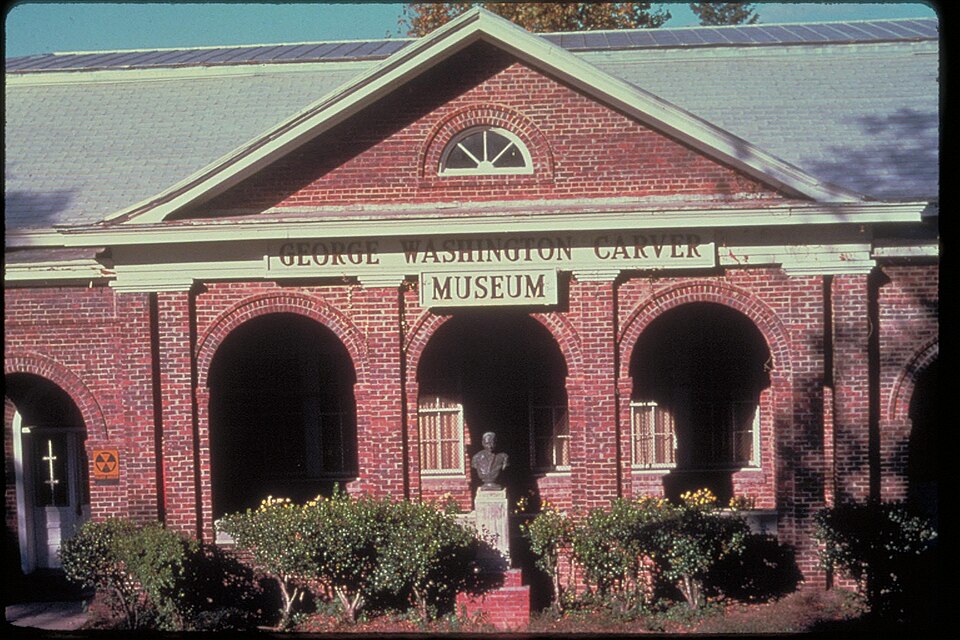
George Washington Carver
Began a 47-year tenure whose research on peanuts, sweet potatoes, and soil gave Southern farmers new crops and income.
1965
National Historic Landmark
Designated a National Historic Landmark; Congress authorized the Tuskegee Institute National Historic Site in 1974.
75%
Veterinary Medicine
The only HBCU offering the DVM. About 75% of the nation’s African American veterinarians graduated from its program, founded in 1944.
1983
Aerospace Engineering
The first and only HBCU with an accredited B.S. in Aerospace Engineering.
1948
Firsts in Alabama and Beyond
First baccalaureate nursing program in Alabama, and the year Tuskegee athlete Alice Coachman won Olympic gold in London.
Sources: Encyclopedia of Alabama, National Park Service, Library of Congress, Tuskegee University, U.S. Supreme Court (Gomillion v. Lightfoot, 364 U.S. 339)
Photo Credits
- Butler Chapel A.M.E. Zion Church: Rivers A. Langley (SaveRivers), CC BY-SA 3.0, via Wikimedia Commons
- Macon County Courthouse: Calvin Beale, Public domain, via Wikimedia Commons
- Downtown Tuskegee: Wikimedia Commons, Public domain, via Wikimedia Commons
- Tuskegee VA hospital: U.S. Department of Veterans Affairs, Public domain, via Wikimedia Commons
- Hangar 1, Moton Field: Ser Amantio di Nicolao, CC BY-SA 4.0, via Wikimedia Commons
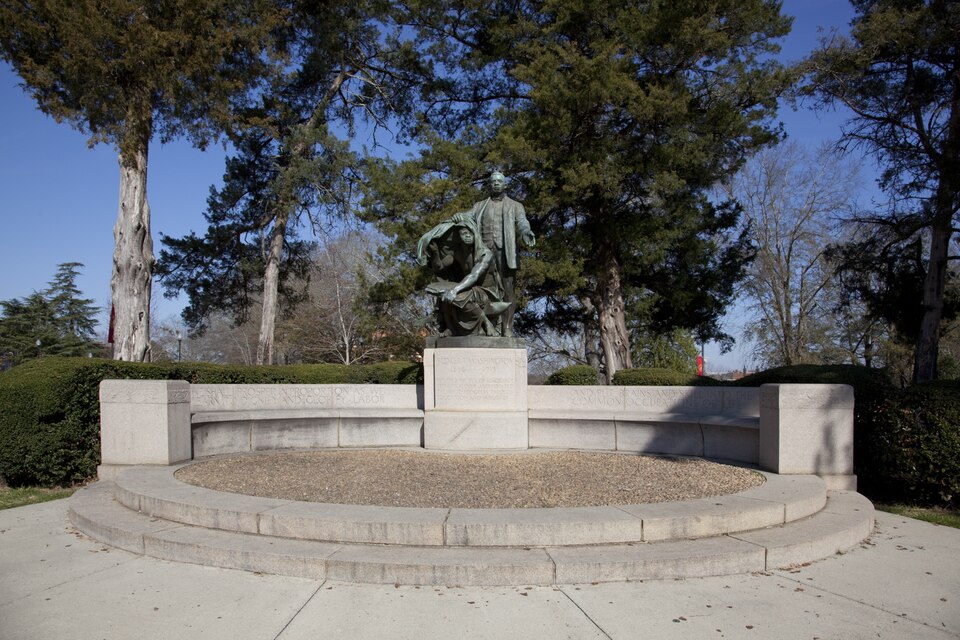
- “Lifting the Veil of Ignorance”: Carol M. Highsmith, Library of Congress, Public domain, via Wikimedia Commons
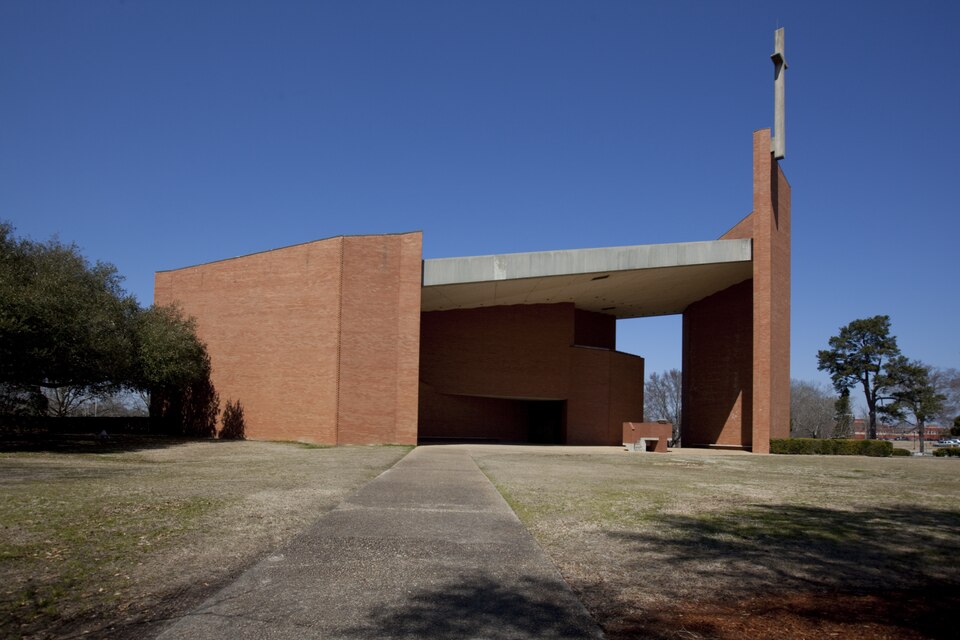
- University Chapel: Carol M. Highsmith, Library of Congress, Public domain, via Wikimedia Commons
- George Washington Carver Museum: National Park Service, Public domain, via Wikimedia Commons